

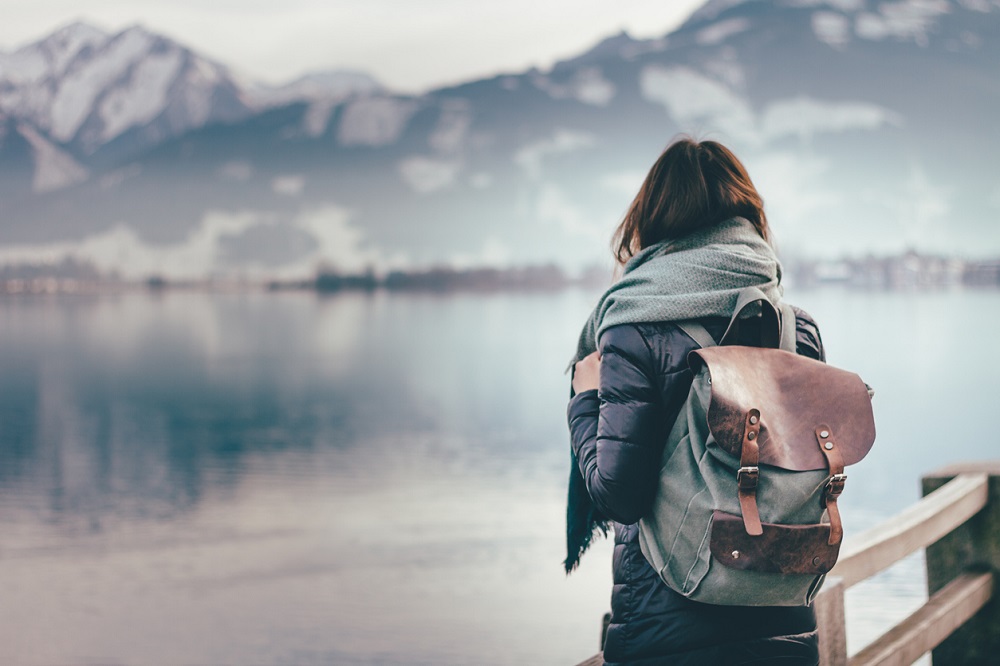
Travel has historically been viewed as a communal activity, an experience to be shared with friends, family, or a romantic partner. For generations, the idea of setting off into the unknown entirely alone was viewed with skepticism, often associated with isolation or extreme risk. However, a major cultural shift has turned this perception on its head. Solo travel has grown into one of the most dynamic sectors of the global tourism economy, evolving from a niche adventure trend into a powerful method for personal growth, self-discovery, and ultimate behavioral autonomy.
Stepping onto an airplane or into a new city alone removes the security blanket of familiar company, forcing individuals to rely entirely on their own resourcefulness. The true appeal of solo travel lies in this exact friction point: it forces an expansion of capability. When you travel alone, you own every decision, manage every logistical challenge, and determine your own pace. Building the confidence required to navigate the globe solo involves moving away from romantic idealism toward practical preparation, rigorous situational awareness, and proactive behavioral strategies.
The Strategy of Intentional Destination Selection
For a first-time solo traveler, jumping directly into a high-friction environment—such as a remote region with absolute language barriers and minimal infrastructure—can lead to immediate psychological burnout. A successful solo journey begins with intentional destination profiling, matching the local operational realities with your current comfort level and travel experience.
When analyzing a potential destination, travelers should prioritize structural safety, transport accessibility, and cultural baseline metrics:
-
Infrastructure Density: Highly developed public transit networks, reliable cellular connectivity, and prominent tourist assistance systems significantly lower the daily stress of navigation.
-
Societal Openness: Selecting regions known for welcoming solo adventurers ensures a higher availability of social spaces, group excursions, and hostel environments designed to foster organic connections.
-
Language Familiarity: While total immersion can be deeply rewarding, choosing a location where you speak the primary tongue or where English is widely used for transit signage provides an invaluable safety net for your initial trips.
As confidence grows over multiple itineraries, travelers can progressively scale up the complexity of their destinations, transitioning from highly structured urban hubs to more remote, culturally distinct landscapes.
Digital Security and Proactive Risk Management
Confidence on the road is directly proportional to the resilience of your backup systems. In a solo context, losing access to funds, documentation, or communication tools can escalate from an inconvenience into a critical emergency instantly. Managing this risk requires the deployment of redundant security layers before your departure.
The first line of defense is digital and document duplication. Travelers must maintain secure cloud backups of their passport data pages, visa confirmations, travel insurance certificates, and medical records. A physical color copy of your passport should be kept in a separate compartment of your luggage, entirely isolated from your primary wallet.
Financial security requires equal redundancy. Never rely on a single debit or credit card. Distribute your financial assets across multiple accounts and physically divide the cards: keep one in your daypack, one in your wallet, and an emergency backup card locked inside your accommodation room safe.
Furthermore, notification protocols are vital. Inform your primary banking institutions of your precise dates and locations of transit to prevent automated fraud systems from freezing your accounts due to unexpected international activity.
The Psychological Art of Navigating Loneliness
The most persistent barrier to solo travel is not physical danger; it is the psychological weight of isolation. Even the most extroverted individuals will experience moments of profound loneliness when sitting at a restaurant table for one or navigating a beautiful landscape with no familiar person to turn to.
Managing this reality requires a complete cognitive reframing of solo time. Loneliness should not be viewed as a structural failure of the trip; instead, it is a natural emotional wave that opens the door to hyper-awareness and deep observation. When you travel with others, your attention turns inward toward the group dynamic. When you travel alone, your attention turns outward toward the environment, allowing you to notice architectural details, local behavioral customs, and ambient sounds that groups naturally filter out.
To balance this isolation, solo travelers can intentionally weave social touchpoints into their itineraries:
-
Walking Tours: Joining localized walking tours on the first day in a new city provides immediate geographical orientation while connecting you with fellow travelers in an informal, low-pressure setting.
-
Skill-Based Classes: Enrolling in localized cooking workshops, surf schools, or language seminars provides a structured activity where communication happens naturally around a shared task.
-
Social Spaces: Utilizing boutique hostels or guesthouses with vibrant common areas allows you to step into social environments when desired and retreat to private quarters when you need to recharge your internal batteries.
Situational Awareness and Intuition Preservation
Safety while traveling alone depends heavily on situational awareness, the practice of actively observing your immediate environment and recognizing potential anomalies or threats before they materialize. This practice is entirely distinct from paranoia; it is a calm, analytical state of presence.
The primary enemy of situational awareness is distraction. Walking through an unfamiliar train station while staring deeply into a phone screen or wearing noise-canceling headphones makes a traveler an immediate target for opportunistic theft. When moving through public transit hubs or dense markets, keep your eyes up, maintain a confident body posture, and secure your belongings in front of your body.
Furthermore, solo travelers must learn to honor their internal intuitive signals. The human brain is exceptionally proficient at processing micro-clues—subtle anomalies in a person’s body language, an unusual pattern of movement in a crowd, or a shifting tone in a neighborhood—long before the conscious mind can articulate the danger. If a specific street, accommodation, or interpersonal interaction triggers an unexplainable feeling of discomfort, exit the situation immediately without worrying about appearing impolite. Cultivating this protective boundaries is an essential element of confident solo exploration.
Frequently Asked Questions
How can a solo traveler manage their luggage safely when using public restrooms or train facilities?
Managing physical bags entirely alone requires strategic planning. Travelers should utilize a high-quality, lightweight backpack as their primary bag rather than heavy rolling luggage, keeping their hands completely free. When using public facilities, never leave bags outside or unattended under any circumstances. Bring all gear inside the cubicle with you. When waiting on transit platforms, loop a strap of your pack around your leg or a fixed pillar to prevent opportunistic grab-and-run theft while you are distracted by scheduling boards.
What practical steps can solo travelers take to stay safe when arriving in a new city late at night?
Late-night arrivals represent a high-vulnerability window. To mitigate this risk, solo travelers should pre-arrange their transit from the airport or station directly to their accommodation using official, verified transportation services or registered taxi lines, completely avoiding independent drivers offering rides in the arrival terminal. Additionally, book an accommodation that features a twenty-four-hour staffed reception desk, and message the property in advance to confirm your late arrival time, ensuring you are not locked out in an unfamiliar neighborhood after midnight.
How do solo travelers handle dining out alone without feeling self-conscious or uncomfortable?
Dining alone is a common psychological hurdle that disappears with exposure. To ease into the experience, choose establishments that feature bar seating or open counter space, which naturally cater to single patrons and facilitate casual conversation with staff or other diners. Bringing a physical book, a travel journal, or a sketching pad provides a comfortable focal point for your attention, transforming the meal from an awkward wait into an enjoyable period of quiet reflection and creative output.
How can a traveler stay connected with family at home without sacrificing their independence?
Maintaining a balanced communication protocol involves setting clear, predictable boundaries. Before departing, establish a structured check-in schedule with a designated contact person at home, such as a quick text message every two days or a brief weekly call. Utilize automated location-sharing applications with trusted inner circles, giving family members peace of mind regarding your general geographic safety while liberating you from the constant pressure of daily updates, thereby preserving the immersive nature of your journey.
What should a solo traveler do if they fall ill or experience a medical emergency abroad?
Handling a health crisis alone demands immediate, methodical action. Prior to your trip, secure comprehensive international travel insurance that explicitly covers emergency medical evacuation. Keep a digital and physical card with the insurance hotline number easily accessible in your wallet. In the event of illness, contact your accommodation management immediately, as local staff can recommend reputable, English-speaking clinics or arrange for reliable medical transit, bypassing the confusion of navigating a foreign healthcare grid alone.
How do solo travelers navigate local transportation grids efficiently without constant cell service?
Operating smoothly without continuous network data requires proactive digital caching. Before leaving a Wi-Fi zone, download the complete offline map vectors of the city through navigation applications, ensuring your internal GPS tracking continues to function without cellular data. Additionally, capture screenshots of transit route maps, save your accommodation’s address in both English and the local script, and carry a physical card from the hotel lobby to show transport operators if digital devices fail completely.
