

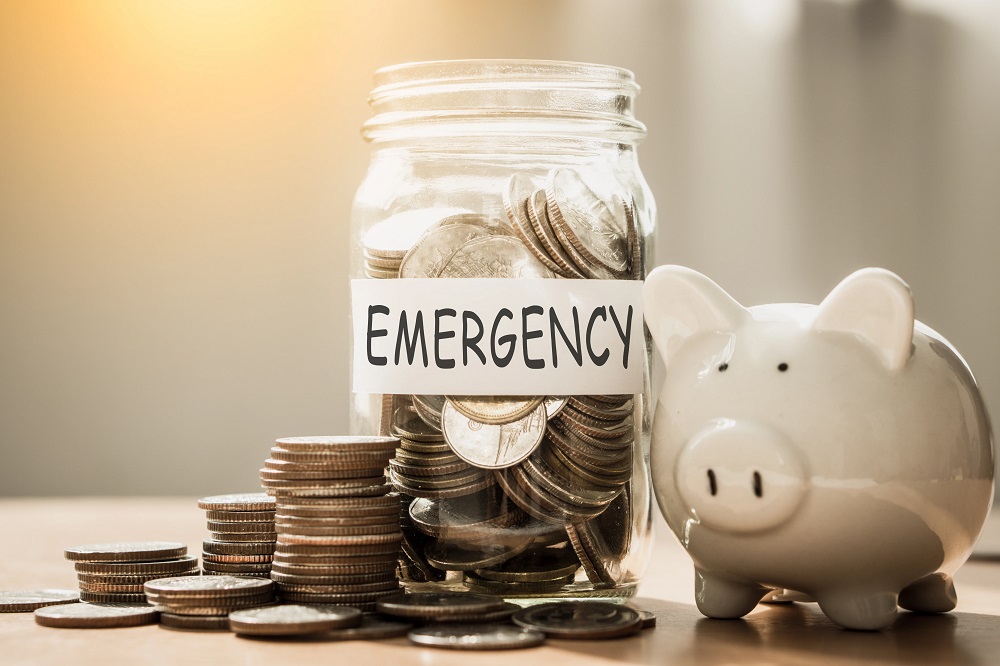
Financial stability is rarely dictated by how much money an individual earns during periods of economic calm. Instead, true long-term security is measured by a person’s capacity to withstand unexpected economic shocks. Job losses, medical crises, major vehicular failures, and macroeconomic downturns are not statistical anomalies; they are inevitable life events. Without a structured liquidity buffer, even minor financial disruptions can cascade into catastrophic debt cycles, forcing individuals to rely on high-interest credit cards, personal loans, or premature retirement account withdrawals.
An emergency fund serves as the foundational cornerstone of any resilient personal finance strategy. It functions as a self-funded insurance policy, providing the psychological peace of mind and financial agility required to navigate life’s volatility without derailing long-term wealth accumulation goals. Building a strong liquid reserve requires transitioning away from casual, sporadic saving habits toward a highly disciplined, systematic approach to capital allocation.
Determining the Target Baseline Capital Requirement
The historical rule of thumb within personal finance literature suggests that an emergency fund should encompass three to six months of living expenses. While this serves as an adequate starting point, a truly robust financial strategy requires a more granular, personalized calculation. A fixed, one-size-fits-all target fails to account for variables such as income stability, familial dependencies, and localized economic dynamics.
To calculate an accurate baseline, individuals must differentiate between their mandatory survival expenses and discretionary lifestyle expenditures. Mandatory survival expenses include housing payments, basic utilities, core nutritional needs, minimum debt obligations, and essential insurance premiums. Discretionary expenses, such as entertainment, restaurant dining, and subscription services, can be immediately eliminated during a crisis.
When deciding whether to target a three-month, six-month, or twelve-month cushion of mandatory expenses, individuals should evaluate their specific risk profiles:
-
Income Volatility: Freelancers, commission-based sales professionals, and contract workers face a significantly higher risk of sudden income drops compared to salaried government employees. A minimum six-to-twelve-month buffer is recommended for highly variable incomes.
-
Household Dependencies: Single-income households with multiple dependents require a vastly larger liquidity pool than dual-income households with no children, where the structural risk is naturally diversified across two distinct revenue streams.
-
Asset Complexity: Homeowners and owners of aging vehicles face a higher frequency of unpredictable capital outlays for maintenance and repairs compared to renters who rely on landlord maintenance agreements.
-
Industry Health: Individuals working in cyclical, niche, or highly volatile sectors should maintain a larger cash reserve to account for prolonged job searches during industry-wide contraction cycles.
Optimizing Asset Allocation for Liquidity and Capital Preservation
Once a target capital requirement is established, the next critical strategic decision involves identifying the correct repository for the funds. The primary objective of an emergency fund is capital preservation and instantaneous liquidity, not wealth maximization or aggressive yield generation.
Placing emergency capital into speculative asset classes like equities, long-term bonds, or real estate introduces unacceptable risk. If a personal financial crisis coincides with a broader macroeconomic market crash, an individual may be forced to liquidate depreciated assets at a severe capital loss.
Conversely, leaving the entirety of the reserve in a traditional brick-and-mortar checking or savings account exposes the capital to purchasing power erosion caused by inflation. The optimal solution involves utilizing specialized cash-management vehicles that balance safety with yield:
-
High-Yield Savings Accounts: Offered primarily by digital banking institutions, these accounts provide complete federal deposit insurance protection while yielding interest rates significantly higher than traditional commercial banks. The funds remain entirely liquid, accessible via standard electronic transfers within one to two business days.
-
Money Market Funds: Managed by brokerage firms, these mutual funds invest exclusively in short-term, highly secure debt securities such as U.S. Treasury bills. They offer stable capital values and high liquidity, often with check-writing capabilities attached.
-
Tiered Certificate of Deposit Ladders: For larger emergency funds, savers can implement a tiered strategy. For example, a twelve-month reserve can be broken into pieces, with half kept in an instantly accessible high-yield account, and the remainder divided into rolling, short-term certificates of deposit that mature sequentially, capturing higher yields without locking up the entire capital base long term.
Reverse-Engineering the Budget via Reverse Budgeting
The most common point of failure when building a cash reserve is the practice of saving what remains after all monthly consumption has occurred. Under this behavioral model, unexpected discretionary expenses invariably expand to consume the remaining balance, leaving the emergency fund stagnant.
Professional financial strategists utilize the concept of reverse budgeting, often summarized as paying yourself first. Under this framework, savings goals are treated as a non-negotiable, top-priority monthly invoice that must be settled the exact day income is received.
To execute this effectively, savers must automate the entire mechanism. By establishing an automated routing instruction through their employer’s payroll system or primary checking account, a predetermined percentage of every paycheck is redirected into the isolated emergency account before the individual has the opportunity to interact with the capital. This automation eliminates behavioral friction, removes decision fatigue, and ensures that the fund grows consistently as a baseline operational expense.
Incremental Optimization and Behavioral Isolation
Building a comprehensive six-month reserve can initially appear psychologically overwhelming, particularly for individuals starting from a zero balance. To maintain momentum, the macro-goal should be deconstructed into minor, easily attainable milestones. Celebrating the attainment of a one-month baseline, followed by a three-month buffer, establishes a positive psychological feedback loop.
Furthermore, structural behavioral isolation is vital. The emergency fund must remain completely invisible during normal day-to-day financial operations. It should be housed in a separate banking institution entirely distinct from the account used for daily debit card transactions and monthly bill payments. Removing the emergency balance from regular mobile banking dashboards reduces the temptation to dip into the capital for non-emergency, impulse purchases disguised as urgent needs.
As an individual’s career progresses and their income expands, they must also remain vigilant against lifestyle creep. When monthly expenses scale upward due to upscale housing or increased consumption, the baseline emergency fund requirement shifts upward concurrently. Regular bi-annual audits ensure that the size of the liquidity reserve remains directly proportional to the household’s current structural cost of living.
Frequently Asked Questions
Is it mathematically wiser to build an emergency fund or pay down high-interest consumer debt first?
From a purely mathematical standpoint, paying down credit card debt carrying high interest rates yields a guaranteed return equal to the avoided interest. However, carrying zero cash reserves while paying down debt creates a dangerous vulnerability. If an unexpected expense arises, the individual is forced to borrow immediately from the same high-interest lines of credit, undoing their progress. The optimal strategy is a hybrid approach: build a starter emergency fund of roughly one month of basic expenses to act as a shock absorber, then aggressively redirect all surplus capital toward debt eradication before returning to build out the full multi-month cash cushion.
How should an individual safely adjust their emergency fund baseline during periods of high inflation?
During inflationary cycles, the nominal cost of mandatory goods like food, energy, and housing escalates, meaning a static cash fund loses its true purchasing power. To mitigate this risk, individuals should audit their actual monthly outlays every six months during inflationary periods and adjust the target total upward. To offset the erosion, capital should be shifted toward high-yield savings vehicles or short-term Treasury instruments whose yields scale dynamically alongside federal interest rate benchmarks.
Should investments in a Roth IRA be considered part of a valid emergency fund strategy?
While Roth IRA contributions can technically be withdrawn at any time without taxes or penalties, relying on a retirement account as a primary emergency fund is highly inefficient. If the stock market experiences a severe downturn, the total value of the account shrinks, meaning an individual might be forced to withdraw capital at the absolute bottom of a market cycle, destroying the compounding potential of their retirement portfolio. Retirement accounts should remain structurally segregated from short-term liquidity pools.
What precise criteria qualify an expense as a genuine financial emergency?
A genuine financial emergency must satisfy three strict criteria: it must be unexpected, absolutely necessary, and urgent. Regular, predictable expenses that occur infrequently, such as annual car insurance premiums, quarterly property taxes, or holiday shopping, do not qualify as emergencies. These predictable outlays must be managed via separate, targeted short-term savings accounts, preserving the core emergency fund exclusively for unforeseen disruptions like sudden medical procedures or immediate employment terminations.
How soon should an individual look to replenish their emergency fund after it has been depleted?
Replenishing the fund must become the absolute highest financial priority the moment the crisis subsides. All discretionary spending, luxury allocations, and extra investments should be entirely paused. Every available dollar of surplus cash flow must be aggressively funneled back into the liquidity reserve until it reaches its baseline operational target, ensuring the household is not caught vulnerable by a secondary compounding crisis.
Can an open line of credit or a home equity line of credit serve as a substitute for an emergency fund?
No. Relying on debt instruments as an emergency backup plan is a high-risk strategy. During systemic economic downturns, credit providers routinely lower credit limits, freeze home equity lines, or tighten lending criteria to mitigate their own risk. Furthermore, borrowing money during a period of income loss adds a new monthly debt obligation to an already strained budget, compounding the financial pressure rather than alleviating it. Real cash liquidity remains irreplaceable.
